
Quick Answer: VTI or VOO?
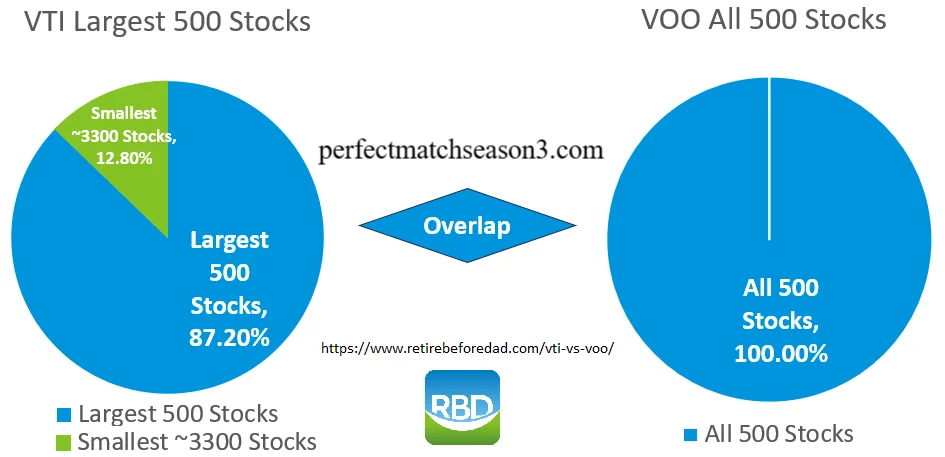
If you want to own basically the whole U.S. stock market in one fund, VTI stock vs VOO leans in favor of VTI. It holds thousands of companies, from giants to small up and comers. If you prefer a fund built around the 500 biggest, most established U.S. companies, VOO is your pick. Both are excellent, low cost, and popular with long term investors. The real difference comes down to how much small and mid cap exposure you want in your portfolio.
Neither choice is wrong. Many investors actually own both, and we will explain why later in this article.
What Is VTI?
VTI is the Vanguard Total Stock Market ETF. It tracks the CRSP US Total Market Index, which means it owns nearly every publicly traded U.S. company. That includes large cap names like Apple and Microsoft, along with thousands of mid cap and small cap companies you may never have heard of.
Think of VTI as buying a slice of the entire U.S. economy in one purchase. When people compare VTI stock vs VOO, they are often really asking how much extra diversification is worth to them.
What Is VOO?
VOO is the Vanguard S&P 500 ETF. It tracks the S&P 500 Index, made up of 500 of the largest and most profitable companies in the United States. These are household names across technology, healthcare, finance, and consumer goods.
VOO gives you concentrated exposure to the biggest players in the market. It skips small and mid cap companies entirely, focusing purely on large, established businesses with strong track records.
VTI vs VOO: Key Differences Explained
Total Market Exposure vs S&P 500 Exposure
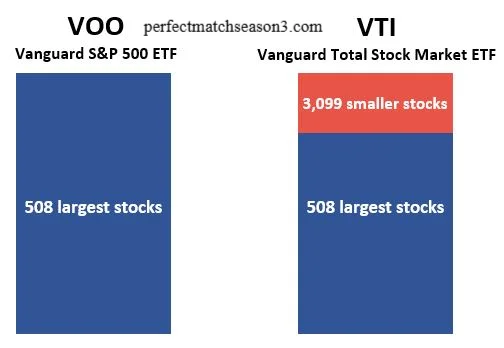
This is the heart of the VTI stock vs VOO debate. VTI spreads your money across roughly 3,600 to 4,000 companies of every size. VOO sticks to 500 large cap companies. VTI naturally includes every stock that VOO holds, plus thousands more.
Large Cap vs Small and Mid Cap Diversification
VOO is almost entirely large cap, since the S&P 500 only includes established companies that meet strict size and profitability rules. VTI adds a meaningful slice of small and mid cap stocks, which can offer higher growth potential but also come with more price swings.
Historical Performance
Over the past decade, VTI and VOO have delivered very similar returns. Since large cap stocks make up most of VTI anyway, the two funds tend to move together. VOO has occasionally edged ahead during strong bull markets led by mega cap tech stocks, while VTI has sometimes outperformed when smaller companies rally.
Volatility and Risk
VOO tends to be slightly less volatile because large, established companies usually have steadier earnings. VTI carries a touch more risk due to its small and mid cap holdings, but this also gives it more room for long term growth.
Dividend Income
Both funds pay quarterly dividends, and the yields are usually very close, often within a small fraction of a percent of each other. Neither fund is designed specifically for dividend income, but both provide a steady, growing payout over time.
Common Use Cases for VTI and VOO
- Retirement investing: Both funds work well inside a 401k or IRA thanks to their low costs and broad exposure.
- Buy and hold portfolios: Their simplicity makes them ideal for investors who want to set it and forget it.
- Passive investing: Both track an index rather than relying on active stock picking.
- Dollar cost averaging: Investors often buy small amounts of VTI or VOO on a regular schedule, smoothing out market ups and downs over time.
VTI vs VOO Comparison Table
| Feature | VTI | VOO |
|---|---|---|
| Index Tracked | CRSP US Total Market Index | S&P 500 Index |
| Number of Holdings | Around 3,600 to 4,000 | 500 |
| Diversification | Large, mid, and small cap | Mostly large cap |
| Historical Returns | Very similar to VOO, slightly more volatile | Very similar to VTI, slightly steadier |
| Expense Ratio | 0.03% | 0.03% |
| Dividend Yield | Roughly 1.3% to 1.5% | Roughly 1.3% to 1.5% |
| Risk Level | Slightly higher due to small caps | Slightly lower, large cap focused |
Which Is Better: VTI or VOO?
Neither fund is objectively better. It really depends on your goals. If you want maximum diversification and exposure to smaller companies with growth potential, VTI fits well. If you prefer sticking with the biggest, most stable companies in America, VOO is a strong choice. When people search VTI stock vs VOO, they are usually looking for the fund that matches their personal risk comfort, not a universal winner.
What Is the Difference Between VTI and VOO?
The core difference is scope. VTI owns the entire U.S. stock market, including small and mid cap companies. VOO only owns the 500 largest U.S. companies through the S&P 500 Index. Because large caps dominate the total market by value, the two funds overlap heavily and often move in a similar direction.
Which ETF Has Better Long Term Returns?
Historically, returns have been extremely close. Since large cap stocks make up most of the total market, VTI and VOO track each other closely over long periods. Small differences appear depending on whether small and mid cap stocks are outperforming or lagging large caps in a given stretch.
Which Has Lower Risk?
VOO generally carries slightly lower risk because it focuses entirely on large, financially stable companies. VTI carries a bit more risk due to its small and mid cap holdings, though this is a modest difference rather than a dramatic one.
Should Beginners Choose VTI or VOO?
Both are beginner friendly thanks to low fees and broad diversification. I usually tell new investors that VTI is a great single fund choice because it already includes everything VOO holds, plus more. That said, VOO is just as simple and works well if you prefer a pure large cap approach. Either way, you are starting with a solid, well diversified foundation.
Can You Own Both VTI and VOO?
Yes, you can own both, though there is significant overlap since VOO holdings are also inside VTI. Some investors hold both to slightly tilt their portfolio toward large caps while still keeping broad market exposure through VTI. It is not necessary, but it is not harmful either. Just know you are not gaining much extra diversification by doing so.
Final Thoughts
When it comes to VTI stock vs VOO, you really cannot go wrong. Both funds offer rock bottom fees, strong long term track records, and exposure to the backbone of the U.S. economy. VTI wins on diversification. VOO wins on simplicity and a pure large cap focus. Pick the one that matches your comfort with risk, or consider combining them if you want a personalized blend.
What matters most is staying invested for the long haul. Which fund fits your strategy better? Share your thoughts, or pass this along to a friend weighing the same decision.
FAQs
Is VTI riskier than VOO? VTI is slightly riskier because it includes small and mid cap stocks, which tend to be more volatile than the large companies in VOO.
Does VOO pay higher dividends than VTI? No, dividend yields between VTI and VOO are usually very close, often within a small fraction of a percent.
What is the expense ratio for VTI and VOO? Both funds charge a low expense ratio of around 0.03%, making them some of the cheapest ETFs available.
Is VTI or VOO better for retirement accounts? Both work well in retirement accounts like a 401k or IRA due to their low costs and long term growth potential.
Can I switch from VOO to VTI later? Yes, you can switch, but selling shares outside a retirement account may trigger capital gains taxes, so plan carefully.
Does VTI include all the stocks in VOO? Yes, VTI holds nearly all the same large cap stocks found in VOO, plus thousands of additional mid cap and small cap companies.
Which fund is more popular among investors? Both are extremely popular, though VOO often gets attention for closely tracking the widely followed S&P 500 Index.
Is one fund better for dollar cost averaging? Both are equally suited for dollar cost averaging since they are low cost, easy to buy regularly, and simple to hold long term.
perfectmatchseason3.com
Email: johanharwen314@gmail.com
Author Name: Hamid Ali
About the Author: Hamid Ali is a finance writer who focuses on making investing simple for everyday readers. He enjoys breaking down ETFs, index funds, and long term investing strategies so beginners can build confidence with their money.