
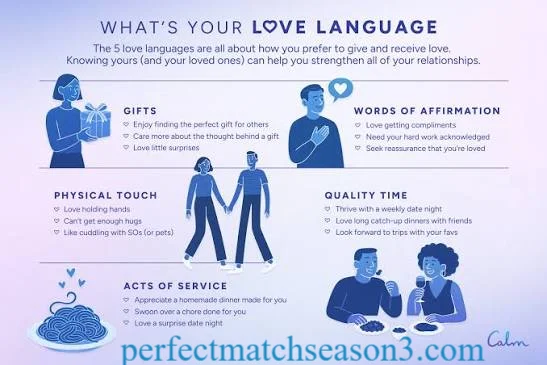
Love languages are the different ways people express and prefer to receive love and affection in their relationships. The concept comes from marriage counselor Gary Chapman, who introduced it in his 1992 book, The 5 Love Languages. After years of counseling couples, Chapman noticed a recurring pattern: partners often expressed love in the way they personally wanted to receive it, rather than in the way their partner actually needed. That mismatch, he argued, was a major source of miscommunication and dissatisfaction in relationships.
Understanding your own love language — and your partner’s — gives you a practical framework for expressing affection in a way that actually lands. It’s not a scientific personality test, but it has become one of the most widely used tools in relationship communication because it gives couples a shared vocabulary for talking about emotional needs.
The 5 Love Languages, Explained
According to Chapman’s theory, most people primarily give and receive love through one of five categories. Many people also have a secondary love language that complements their primary one.
1. Words of Affirmation
This love language centers on verbal affection — compliments, appreciation, and encouragement. People whose primary love language is words of affirmation feel most loved when their partner tells them, out loud or in writing, why they’re valued.
Examples include:
- Genuine compliments (“You handled that so well”)
- Verbal appreciation for small, everyday things
- Encouraging words during difficult moments
- Text messages or notes expressing affection
For someone with this love language, criticism or a lack of verbal acknowledgment can feel especially hurtful, even if their partner shows love in other ways.
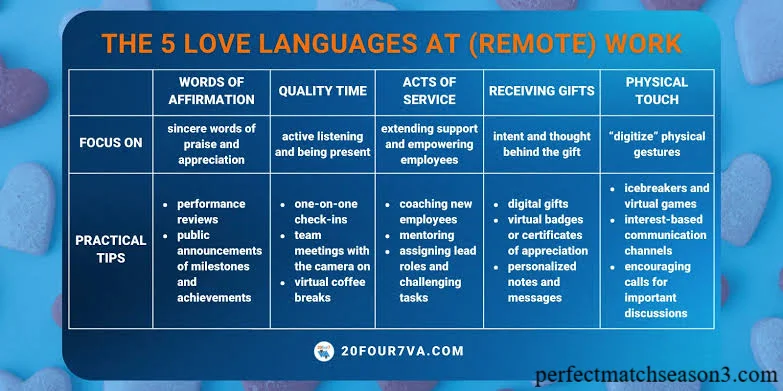
2. Quality Time
Quality time is about undivided attention. It’s not simply being in the same room — it’s meaningful conversations and shared activities where both partners are fully present.
This might look like:
- Putting phones away during dinner
- Planning regular date nights
- Having deep, uninterrupted conversations
- Doing an activity together, just the two of you
For people with this love language, distraction or cancelled plans can feel like a bigger deal than they might for someone else, because presence itself is the message.
3. Acts of Service
Acts of service means showing love through helping your partner — taking something off their plate before they even ask. Chapman describes this as doing things you know your partner would like, out of love rather than obligation.
Common examples:
- Cooking a meal after a long day
- Running an errand without being asked
- Helping with a task your partner finds stressful
- Small acts of kindness that make daily life easier
For someone whose primary love language is acts of service, empty promises or unfinished tasks can register as a lack of care, even when affection is intended.
4. Receiving Gifts
This love language isn’t about materialism — it’s about thoughtfulness. A gift, however small, serves as a visual reminder that someone was thinking of you.
This can include:
- A small souvenir from a trip
- A handwritten card
- Flowers for no particular occasion
- Meaningful gestures tied to shared memories
People with this love language often place more value on the thought and effort behind a gift than its price tag. Forgotten occasions can feel especially painful for this group.
5. Physical Touch
Physical touch covers non-sexual affection as well as intimacy — hugs and cuddling, holding hands, a hand on the shoulder, or sitting close together.
Examples include:
- Holding hands in public
- Hugging hello and goodbye
- Cuddling while watching a movie
- A comforting touch during a hard conversation
For people who prioritize this love language, physical closeness is often how they feel most secure and emotionally connected in a relationship.
How Do You Find Your Love Language?
The most reliable way to identify your love language is by taking a structured love language quiz or love language test, which asks you to choose between paired statements reflecting each category.
Gary Chapman’s official website offers a free, well-known 5 love languages test based on his original research. It typically takes just a few minutes and ranks your preferences across all five categories, showing both your primary and secondary love language rather than a single result.
If you don’t want to take a formal quiz, you can also reflect on:
- What makes you feel most appreciated when your partner does it
- What you complain about most when it’s missing in a relationship
- How you naturally express love to others
What Is the Most Common Love Language?
There isn’t one universally “most common” love language — preferences vary by individual, and no large-scale, peer-reviewed study has definitively ranked them across the general population. That said, informal surveys and relationship counselors often report that quality time and words of affirmation are frequently cited as top preferences, though this can vary significantly based on upbringing, culture, and personal experience.
It’s also worth noting that love languages aren’t fixed for life. They can shift depending on the relationship stage, life stressors, or even the specific partner you’re with.
Dating and Relationships With Mismatched Love Languages
Here’s the key insight: having different love languages than your partner is completely normal — and manageable. The goal isn’t for both partners to share the same love language, but to understand and intentionally speak each other’s.
For example, if one partner’s primary love language is acts of service and the other’s is words of affirmation, friction can arise when one feels they’re “doing enough” by helping around the house, while the other feels unheard because they’re not receiving verbal appreciation. Once both partners understand this difference, they can consciously make an effort to express love in the language their partner values most — even if it doesn’t come naturally.
This kind of intentional effort is often what separates couples who feel emotionally connected from those who feel like they’re speaking past each other, regardless of how much they genuinely care for one another.
Criticisms of the Love Language Theory
While widely popular, the love language framework isn’t without criticism from relationship researchers. Common critiques include:
- Lack of rigorous scientific validation – The five categories were developed from Chapman’s counseling experience rather than controlled psychological research.
- Oversimplification – Critics argue that reducing complex emotional needs to five fixed categories may overlook the nuance of individual relationships.
- Limited predictive value – Some studies have found that knowing a partner’s love language doesn’t strongly predict relationship satisfaction on its own.
- Cultural differences – Expressions of love vary across cultures, and the framework was developed primarily within a Western, Christian counseling context, which may not fully translate across all backgrounds.
Despite these criticisms, many therapists still find the framework useful as a starting point for conversations about relationship needs and communication styles, even if it isn’t treated as a definitive psychological model.
How to Use Love Languages to Strengthen Your Relationship
Understanding love languages is only useful if you apply it. Here’s how couples can put the theory into practice:
- Take the quiz together and share your results openly.
- Ask directly what makes your partner feel most loved, rather than assuming.
- Practice their language, not just yours — even if it feels unfamiliar at first.
- Communicate when you feel unseen, rather than expecting your partner to guess.
- Revisit the conversation periodically, since needs can shift over time, especially during major life changes like marriage, parenthood, or long-distance periods.
Small, consistent efforts in your partner’s preferred language tend to matter more than occasional grand gestures.
The Bottom Line
Love languages offer a simple, practical way to talk about something that’s often hard to put into words: what makes us feel genuinely loved. While the theory isn’t backed by rigorous scientific research, it remains a useful conversation-starter for couples looking to improve communication, reduce misunderstandings, and build stronger emotional intimacy. The real value isn’t in labeling yourself with a single category — it’s in using that understanding to show up for your partner in the way that matters most to them.

FAQ Section
Is there an official Love Languages book?
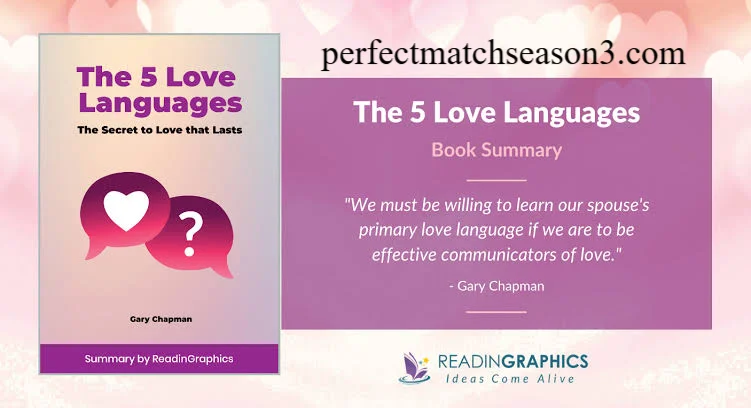
Yes. The 5 Love Languages: The Secret to Love That Lasts by Gary Chapman, first published in 1992, is the original book that introduced the concept. It has since sold millions of copies and been adapted into versions for singles, teens, children, and married couples.
Where can I take a Love Languages test?
The official 5 Love Languages test is available for free on Gary Chapman’s official website. It asks a series of paired questions to determine your primary and secondary love language.
What does the 5 Love Languages test measure?
It measures your relative preference across the five categories — words of affirmation, quality time, acts of service, receiving gifts, and physical touch — to identify which ones matter most to you in a relationship.
What are the 7 love languages?
The original theory includes only 5 love languages. Some relationship writers and coaches have proposed additional categories — such as “conversation” or “intellectual connection” — under the label of “7 love languages,” but these are not part of Gary Chapman’s original, widely recognized framework.
Is there a 5 love languages quiz I can take for free?
Yes. The official quiz on Gary Chapman’s website is free and takes just a few minutes to complete, providing a breakdown of your love language preferences.
What does Reddit say about love languages?
Discussions on Reddit and similar platforms often focus on real-life experiences applying love languages in relationships — including how mismatched languages caused misunderstandings and how couples resolved them through direct communication, alongside some skepticism about the theory’s scientific basis.
How do the 5 love languages apply in relationships?
They provide a framework for understanding how you and your partner prefer to give and receive affection, helping couples reduce miscommunication by consciously expressing love in the way their partner values most, rather than only in their own natural style.
Is there a 7 love languages test?
Some third-party websites and relationship coaches offer unofficial “7 love languages” quizzes, but these are not based on Gary Chapman’s original research. The most widely recognized and validated version remains the official 5 love languages test.
Author Bio: Hamid Ali is a relationship and lifestyle writer covering love, dating, communication, and emotional well-being. He focuses on making relationship concepts easy to understand through practical, research-informed, and reader-friendly insights.
Author Name: Hamid Ali
Email: johanharwen314@gmail.com
Also Read: