

Match Overview
The highly anticipated matchup between the Atlanta Braves Atlanta Braves vs Mets Match Player Stats and the New York Mets is set to take place on October 15, 2023, at the iconic Truist Park in Atlanta, Georgia. This game marks an important chapter in the ongoing rivalry between these two storied franchises within Major League Baseball (MLB). The Braves, boasting a strong season so far, are currently positioned well in the National League standings, aiming for a playoff berth, while the Mets are striving to maintain their competitiveness in the league.
Historically, encounters between the Atlanta Braves and Mets have been significant not only for individual player performances but also for the overall dynamic of the division. Both teams have shown moments of brilliance throughout the season, making this match essential for their respective aspirations. As the postseason approaches, the stakes are raised, and players on both sides are expected to deliver exceptional performances.
Pre-match expectations have been building as fans eagerly anticipate the strategies that each team will deploy. The Braves are known for their powerful lineup, featuring top hitters who can change the game in a single swing, while the Mets are expected to leverage their pitching prowess, with their ace set to take the mound. The atmosphere surrounding this game is electric, with both teams keen on gaining a competitive edge, not only for this match but for the rest of the season.
In terms of standings, the Braves hold a slight advantage over the Mets, making this matchup a critical point for both teams. Fans and analysts alike are keenly watching how the result will impact their playoff hopes. As the teams prepare to clash on the field, the excitement and importance of this showdown are undeniably palpable. The outcome will not only affect the current standings but will also have implications for the morale and momentum of both clubs moving further into the season.
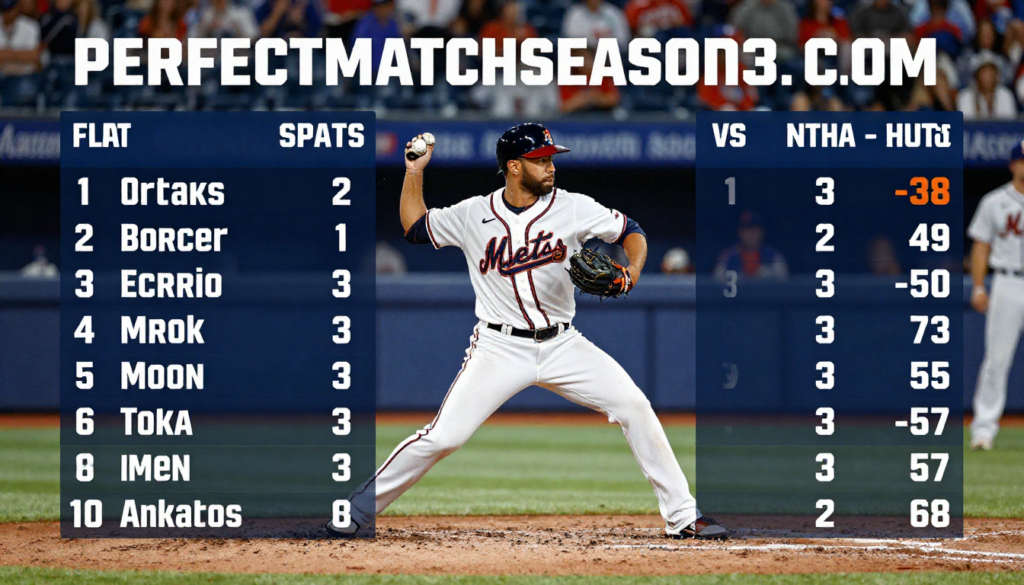
Full Player Stats Table
In the realm of Major League Baseball, player statistics serve as a critical measure of performance for both teams involved in a matchup. The upcoming confrontation between the Atlanta Braves Atlanta Braves vs Mets Match Player Stats and the New York Mets promises intense competition, underpinned by the individual contributions of each player. Below, we provide a detailed stats table that encompasses key performance indicators for players from both teams. This overview is set to aid fans and analysts alike in evaluating how these athletes impact the game.
For the Atlanta Braves, notable batting statistics include key metrics such as batting averages, runs scored, home runs, and runs batted in (RBIs). These figures reflect the offensive capabilities of the Braves’ hitters and their ability to execute plays that lead to scoring opportunities. For instance, the batting average indicates overall effectiveness at the plate, while the total number of home runs can highlight a player’s power hitting skills.
On the pitching side, the New York Mets present their statistics through several essential categories. Earned Run Average (ERA), strikeouts, and saves are crucial metrics that illustrate pitcher dominance and effectiveness in crucial situations. The ERA tells fans how many earned runs a pitcher typically allows over nine innings, while strikeouts showcase the ability to overpower batters. Saves, on the other hand, indicate how successfully a closer can maintain a lead at the end of a game.
This detailed statistical analysis provides a comprehensive picture of each player’s contribution, enabling supporters and analysts to gauge both individual and team dynamics in the upcoming face-off. Understanding these individual stats is vital for predicting potential outcomes of games and assessing player development in each season.
Top Performers
In the highly competitive matchup between the Atlanta Braves Atlanta Braves vs Mets Match Player Stats and the New York Mets, several players emerged as standout performers, showcasing their talents and influencing the game significantly. For the Braves, one of the key figures was Ronald Acuña Jr. His offensive prowess was on full display as he delivered a remarkable performance at the plate, registering three hits, including a home run, and driving in four runs. Acuña’s ability to not only reach base but also convert those opportunities into runs underscored his critical role in the Braves’ offensive line-up. Additionally, his speed on the bases created multiple scoring opportunities, putting pressure on the Mets’ defense.
On the defensive side, the Braves’ pitcher, Max Fried, proved to be an invaluable asset. He pitched seven stellar innings, allowing only two earned runs while striking out nine batters. Fried’s proficiency in managing the Mets’ lineup demonstrated his ability to execute pitches effectively and maintain control throughout the game. His strong performance set the tone for the Braves’ victory and highlighted his importance to the team’s pitching rotation.
Conversely, the Mets also had notable contributors in the encounter, with Pete Alonso leading their offensive efforts. Alonso, known for his power-hitting capabilities, hit a two-run homer that provided a spark for the Mets at a crucial juncture of the match. Along with his home run, he added another hit, enhancing his impact on the scoreboard. On the defensive front, the Mets’ shortstop Francisco Lindor made several crucial plays, demonstrating excellent range and precision, which helped keep the Braves from extending their leads further.
The performances from both the Braves and Mets players not only showcased their athletic skills but also contributed significantly to the overall dynamics of the game, making their individual contributions pivotal to their respective teams’ strategies.
Source Wikipedia
Quarter-by-Quarter Breakdown
The engaging matchup between the Atlanta Braves Atlanta Braves vs Mets Match Player Stats and the New York Mets unfolded over the course of nine innings, each segment revealing critical moments that shaped the outcome. Evaluating the flow of play inning by inning highlights the shifts in momentum experienced by both teams.
In the first inning, the Braves established an early lead, with a standout performance from their top hitters. Scoring quickly, they capitalized on a lapse in the Mets’ defense. Meanwhile, the Mets struggled to answer, facing a formidable pitching display from the Braves’ starter. This initial score set the stage for a competitive contest.
As we transitioned into the second inning, the Mets made strategic adjustments, showcasing their agility in both offense and defense. A pivotal double play solidified their defense and temporarily halted the Braves’ offensive aggression. This moment was crucial and revitalized the Mets, allowing them to find their footing as they began to build momentum.
By the third inning, the Mets responded with a powerful offensive surge, driving in crucial runs. This comeback was marked by well-placed hits and aggressive base running, which illuminated their determination to reclaim the lead. Conversely, the Braves’ defense faltered slightly, a factor that the Mets took full advantage of.
The later innings saw an escalation in tension. Each team displayed moments of brilliance, encapsulated by clutch pitching performances and strategic decisions. Critical strikeouts for the Braves and timely hits for the Mets kept the score close, leaving fans on the edge of their seats. As the game approached the concluding innings, the stakes intensified, showcasing not only athleticism but also the mental fortitude necessary to succeed in high-pressure situations.
This breakdown reveals how each phase of the game contributed to the intricate narrative of the match, detailing not just the scoreboard but the emotional and tactical undertones that defined this thrilling competition.
Advanced Stats (Efficiency, Turnovers, Usage Rate)
In analyzing the match between the Atlanta Braves Atlanta Braves vs Mets Match Player Stats and the New York Mets, advanced statistics provide a comprehensive view of each team’s performance. Key metrics such as player efficiency ratings, turnover ratios, and usage rates are instrumental in understanding strategic success and individual contributions during the game.
Player efficiency ratings (PER) serve as a significant statistical measure that condenses a player’s overall contributions into a single number. High PER can indicate a player’s effectiveness on the court, encompassing various aspects such as scoring, rebounding, assists, and defensive contributions. In this matchup, distinctions in PER among both teams revealed crucial insights—players with notably higher ratings frequently dictated the pace and flow of the game, resulting in a competitive edge.
Turnovers also play a pivotal role in determining the outcome of a game. The turnover ratio, which correlates the number of possessions a player has with the turnovers committed, offers a lens into a player’s decision-making and ball-handling abilities. A low turnover ratio generally reflects a player’s efficiency and ability to maintain offensive momentum. In the clash between the Braves and the Mets, certain players stood out with adept ball-handling skills that resulted in fewer turnovers, thereby facilitating better scoring opportunities for their respective teams.
Usage rate is yet another salient statistic that measures the amount of offensive involvement by a player while he is on the court. It quantifies the percentage of a team’s plays that a player is directly involved in during a game. By examining usage rates, we can gauge how teams allocate their offensive efforts and identify which players are pivotal in executing game plans. Both teams showcased varying levels of usage rates, indicating differing strategies that impacted their overall effectiveness.
Key Moments of the Game
The encounter between the Atlanta Braves and the Mets was marked by several pivotal moments that had a significant impact on the final outcome. Right from the start, the atmosphere was charged with anticipation as fans filled the stands, eager to see their teams battle it out. Early in the first inning, the Braves made a powerful statement by scoring two runs, thanks to a sharp double by their star batter. This early advantage set the tone for the match and placed immediate pressure on the Mets.
As the game progressed, both teams exhibited remarkable defensive plays that kept fans on the edge of their seats. A particularly impressive catch by the Mets’ center fielder in the third inning not only prevented a potential home run but also shifted momentum back in favor of the Mets, re-energizing their dugout. However, the Braves responded vigorously with their pitcher demonstrating his skills through a series of strikeouts, which further emphasized the drama of the game.
One of the most controversial moments came during the fifth inning when a close play at first base resulted in an unexpected call by the umpire, leading to a heated discussion between the players and the coaching staff. This pivotal moment shifted the tide momentarily, as the Mets capitalized on the ensuing frustration from the Braves, managing to score three runs during the next inning. With the score tied, the tension escalated as each team seemed to find new resolve.
Ultimately, the game reached its climax in the late innings, with both teams having opportunities to secure victory. Yet, a dramatic two-run homer from the Braves in the eighth served as the definitive turning point, sealing their triumph against the Mets. Every key moment highlighted the competitive spirit and resilience of both teams, offering fans a thrilling spectacle that is characteristic of such intense rivalries.
Fan Reactions and Social Media Buzz
The matchup between the Atlanta Braves and the New York Mets has sparked significant excitement among fans, with social media platforms becoming a vibrant hub for discussions and reactions. Following the game, particularly noteworthy performances, whether exceptional or disappointing, were widely circulated across Twitter, Instagram, and Facebook. The trending topics included player highlights, such as standout pitching performances, thrilling home runs, and crucial defensive plays, all of which were celebrated or critiqued in real-time.
Fan reactions on Twitter, often characterized by spirited banter and passionate commentary, reflected a mixture of pride, frustration, and elation. Hashtags related to the game, such as #BravesWin or #MetsPride, trended as supporters voiced their sentiments. One popular tweet garnered attention as it encapsulated a particularly stunning catch by a Braves outfielder, driving engagement through retweets and likes. Fans also took to social media to express their thoughts on controversial calls made by umpires, adding layers of debate around the game’s officiating.
Additionally, the performance analysis of star players dominated discussions among fans. Comments about the batting average of key hitters and the strikeout rates of pitchers revealed a keen awareness of player statistics and how they influence the game’s outcome. Memes and reaction videos proliferated, capturing the emotional rollercoaster experienced during critical moments of the match. The community engaged in discussions not only about individual performances but also about the potential implications of this game for the season’s standings.
Overall, the social media buzz surrounding the Braves versus Mets match underscores the integral role that digital platforms play in enhancing the fan experience. As reactions continue to flow, it is clear that MLB games are not merely sporting events; they are cultural phenomena, prompting discussions that extend far beyond the final score.
Injury Reports and Impacts
Injuries are an integral part of any competitive sports environment, and during the recent Atlanta Braves vs. Mets matchup, several key player injuries significantly influenced the game dynamics. Understanding these injuries is crucial in analyzing not only player performances but also overall team strategies.
For the Braves, the absence of their starting pitcher, who was sidelined with a shoulder strain, greatly altered their competitive edge. Without his presence on the mound, the Braves were forced to rely on a less experienced pitcher, which ultimately affected their defensive strategies. The adjustment led to a shift in how the Braves managed their bullpen over the course of the game, complicating their pitching strategy and potentially revealing weaknesses that the Mets could exploit. Consequently, this injury impacted not only individual player performances but also the Braves’ ability to execute their game plan effectively.
On the opposite side, the Mets faced their own injury setbacks that required quick adaptations. A key outfielder sustained an ankle sprain just before the game, which limited the team’s ability to rotate players effectively. His absence forced the Mets to alter their batting order and potentially weakened their offensive production. The injury altered the Mets’ aggressiveness on the bases and diminished their previously set strategy for creating scoring opportunities. This change became apparent as the game progressed, and it raised questions about their depth and ability to adapt in high-pressure situations.
These injuries not only exemplify how player availability can shape a team’s performance but also highlight the importance of effective injury management and strategic adjustments in professional baseball. Both teams demonstrated resilience in the face of these challenges, but the impact of injuries proved to be a critical factor in determining the outcome of this matchup.
FAQs About the Atlanta Braves vs Mets Match
The match between the Atlanta Braves and the New York Mets has been a focal point in Major League Baseball, particularly in the National League East division. Fans often seek historical statistics when discussing these two teams. Historically, the Braves have had a competitive edge in head-to-head matchups, though the rivalry has intensified in recent years, especially as both teams contend for postseason positions.
In terms of player comparisons, several key athletes from both teams have played pivotal roles in defining the outcomes of past encounters. Notable players include Ronald Acuña Jr. from the Braves, known for his powerful hitting and speed, and Pete Alonso from the Mets, who offers formidable strength at the plate. The dynamic between these players not only showcases individual talent but also emphasizes collective team strategies that have evolved over seasons.
Reviewing previous matchups, the Braves and Mets have engaged in memorable series that have often come down to the wire, highlighting their competitiveness in crucial games. For instance, recent seasons have seen thrilling games featuring late-inning drama and significant plays that greatly influence standing in the division. Fans often analyze these games to predict future performance trends, noting how areas such as pitching strategies and offensive cohesiveness play vital roles.
Looking ahead, expectations for future encounters between the Braves and Mets remain high. Analysts predict the rivalry will continue to flourish, contributing to intense seasons filled with excitement. Fans can look forward to seeing how emerging talents and veteran players will shape these matchups, adding layers of intrigue as both teams strive for supremacy.
Also Read In perfectmatchseason3.com
Email: johanharwen314@gmail.com
Author Name: Hamid Ali