
Introduction
If you grew up watching black-and-white television, one name probably makes you smile without thinking twice. Barney Fife, the lovable, bumbling deputy of Mayberry, became more than just a funny side character. He became a cultural institution.
You might remember him for the one bullet he kept in his shirt pocket. Or maybe for the way he puffed up his chest and tried to look tough while clearly falling apart inside. Whatever your first memory is, Barney Fife left a mark on American television that still holds up today.
This article covers everything you need to know about Barney Fife. You will learn who played him, why he worked so well as a character, his best episodes, how he influenced comedy, and why people still love him decades after the show ended. Whether you are a longtime fan or just getting curious, you are in the right place.
Who Was Barney Fife?
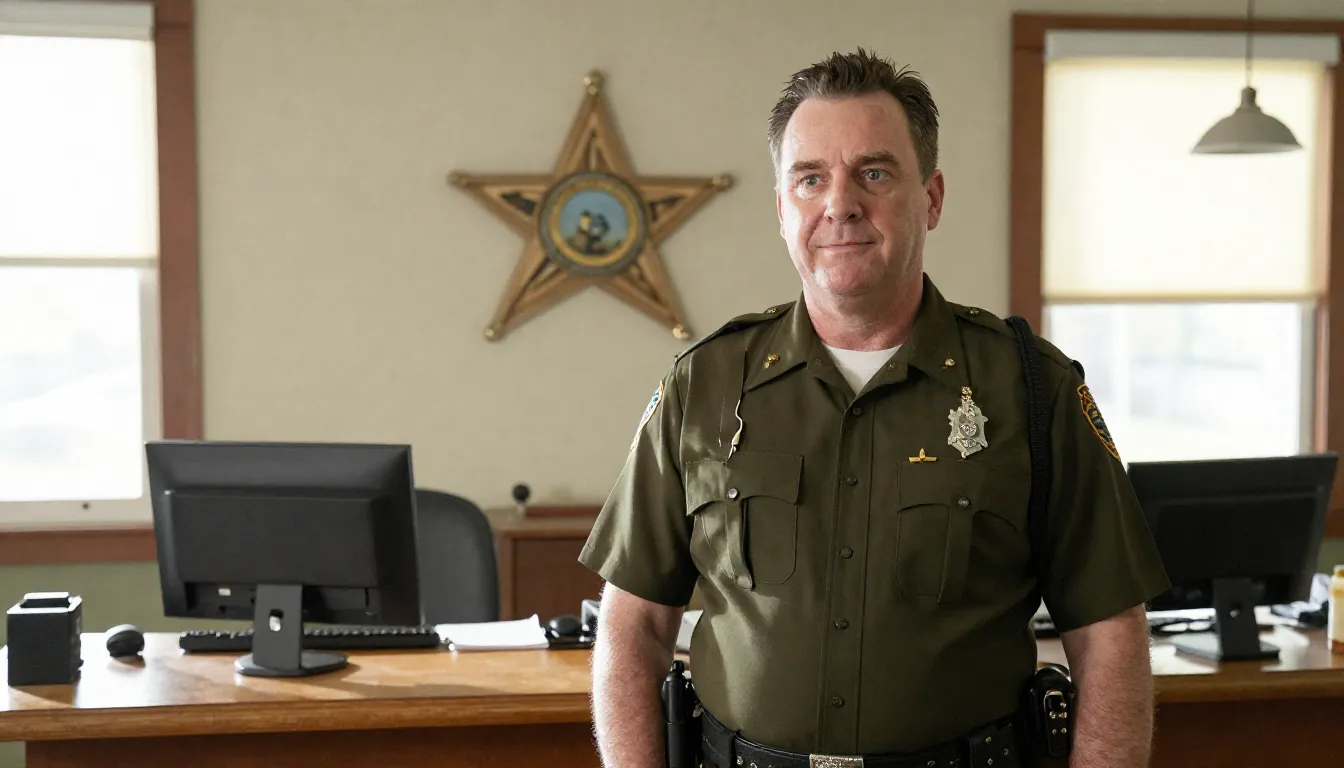
Barney Fife was the deputy sheriff of the fictional small town of Mayberry, North Carolina. He appeared on The Andy Griffith Show, which aired on CBS from 1960 to 1968. His full name was Bernard P. Fife, and he served alongside Sheriff Andy Taylor, played by Andy Griffith.
The character was created to be the comic foil to Andy’s calm, wise demeanor. Where Andy was steady and reasonable, Barney was nervous, overconfident, and prone to making small problems worse. The contrast worked perfectly.
Barney lived at 411 Elm Street in Mayberry and was a man of routines, rituals, and big plans that rarely came together. He dreamed of big-city police work while patrolling a town where the biggest crime was usually someone jaywalking or a cow wandering onto Main Street.
The Actor Behind the Character: Don Knotts
You cannot talk about Barney Fife without talking about Don Knotts. He brought the character to life with a physicality and emotional depth that felt effortless.
Don Knotts was born on July 21, 1924, in Morgantown, West Virginia. Before The Andy Griffith Show, he had already proven himself as a comedian and actor on The Steve Allen Show. But it was Barney who made him a household name.
Knotts played the role for five seasons, from 1960 to 1965. He then left to pursue a film career. He returned as a guest star in later seasons, and eventually appeared in the spinoff Mayberry R.F.D. His performance as Barney earned him five Primetime Emmy Awards, all for Outstanding Supporting Actor in a Comedy Series. That record stood for decades.
What made Knotts exceptional was his ability to shift from slapstick to genuine emotion in seconds. Barney could make you laugh until your sides hurt and then make you feel unexpectedly sad in the same episode. That range was rare, and Knotts used it masterfully.
What Made Barney Fife So Funny?
At first glance, Barney seems like a simple joke. He is the guy who trips over his own ambition. But the comedy runs much deeper than that.
The Gap Between Confidence and Competence
Barney’s humor came from one core tension. He believed he was exceptional at his job. The reality was that he needed Andy to quietly fix almost everything he touched. That gap between self-image and reality is something most people recognize. We have all met someone like Barney. We might even be a little like him sometimes.
This made him relatable in a way that pure buffoons are not. You laughed at Barney, but you also rooted for him.
His Physical Comedy
Don Knotts had a rubber-band quality to his face and body. Every emotion registered across his entire frame. His eyes could go wide with panic in a millisecond. His voice cracked under pressure. His whole body seemed to vibrate when he was nervous or excited.
This physical expressiveness made even simple reactions funny. Barney did not just react to things. He performed reactions in a way that felt both exaggerated and completely genuine.
The One Bullet Rule
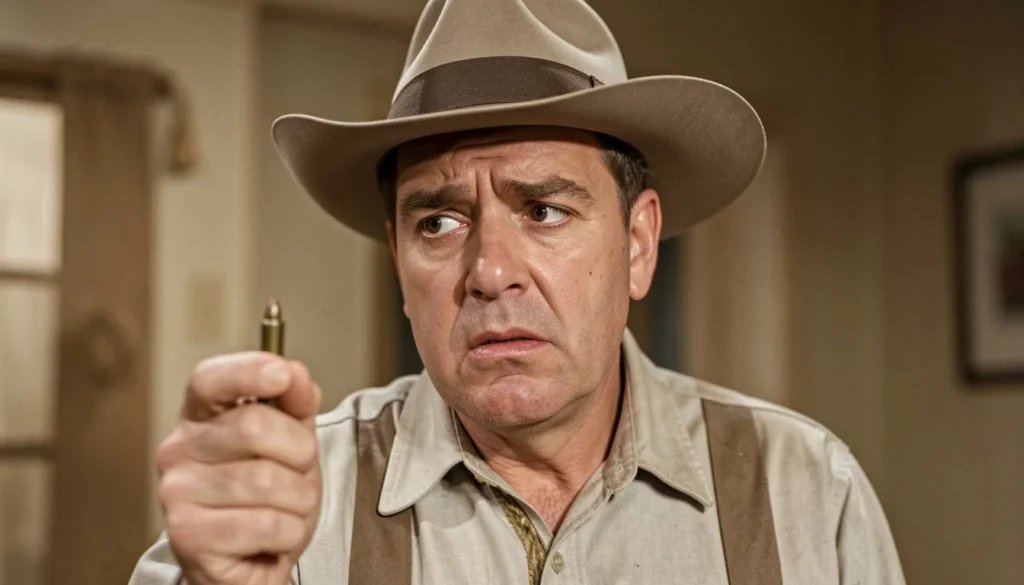
One of the most memorable details of the character was that Andy only trusted Barney with one bullet. Barney kept that bullet in his shirt pocket because he kept accidentally shooting his gun at the wrong moment. This single detail told you everything about the dynamic between the two friends. Andy loved Barney but understood his limits. Barney accepted the rule without fully admitting why it existed.
Barney Fife’s Best Episodes
If you want to understand why Barney Fife endures as a character, these episodes are the place to start.
“Barney’s Sidecar” (Season 4, Episode 1)
Barney buys a World War I military motorcycle with a sidecar and immediately becomes a menace to the town. The episode showcases his enthusiasm, his terrible judgment, and his genuine heart all at once.
“The Pickle Story” (Season 2, Episode 11)
Aunt Bee enters her homemade pickles in the town fair. The problem is that her pickles taste terrible. Barney and Andy try to secretly swap them out with store-bought ones. The plan goes sideways in the most Barney way possible. This episode is often ranked among the best in the entire series.
“Barney and the Choir” (Season 2, Episode 19)
Barney joins the town choir despite having a genuinely terrible singing voice. Nobody wants to tell him the truth. The episode handles the comedy and the emotional stakes with care. It captures how much people in Mayberry cared for each other, even when it was inconvenient.
“Man in a Hurry” (Season 3, Episode 16)
A businessman gets stranded in Mayberry on a Sunday and is desperate to leave. Barney’s insistence on proper Sunday procedures becomes an accidental meditation on slowing down. This quieter episode shows Barney’s rigidity as both a flaw and a kind of charm.
“Citizen’s Arrest” (Season 4, Episode 11)
Barney gives Gomer Pyle a ticket for an illegal U-turn. Gomer then makes a citizen’s arrest of Barney for the same offense. Barney’s wounded pride and total inability to let it go drives the whole episode. It is one of the funniest half hours in the show’s run.
Barney Fife’s Relationship with Andy Taylor
The friendship between Barney and Andy was the real heart of the show. It was not just a comedy duo. It was a portrait of genuine, lasting friendship between two very different people.
Andy was patient with Barney in a way that felt unconditional. He never publicly embarrassed him. He quietly cleaned up Barney’s messes without making Barney feel small. That dynamic was written with real care.
Barney, for his part, was completely devoted to Andy. He was protective of him, loyal to him, and genuinely admired him. When Barney was at his most vulnerable, it was usually Andy who steadied him.
This relationship modeled something important. It showed that friendship does not require two people to be equal in ability or temperament. It requires patience, loyalty, and the willingness to see the best in someone even when they are at their worst.
Barney Fife’s Impact on American Comedy
Barney Fife changed how television wrote supporting characters. Before the show, the comic relief was often a flat, interchangeable figure. Barney showed that a supporting character could have as much depth and emotional resonance as the lead.
His influence appears in many characters who came after him. You can see Barney’s DNA in characters like Ted Baxter from The Mary Tyler Moore Show, Michael Scott from The Office, and even David Brent from the UK version. All of them share that same core tension between self-perception and reality. All of them make you laugh and cringe and feel something softer underneath.
Don Knotts himself became a touchstone for comedians. Steve Martin, Jim Carrey, and many others have cited him as an influence. The physicality Knotts brought to Barney set a standard for physical comedy on television.
Why Barney Fife Still Matters Today
Decades after The Andy Griffith Show ended its original run, Barney Fife still resonates. Streaming platforms regularly see older audiences revisit the show and younger audiences discover it for the first time.
Part of this staying power comes from the character’s humanity. Barney was flawed in ways that felt true. He was insecure but covered it with bluster. He wanted to be taken seriously and rarely was. He cared deeply about doing right, even when he got everything wrong.
Those feelings are not dated. They are part of being human.
There is also something appealing about Mayberry itself. The world Barney inhabited was slower, simpler, and built on personal relationships rather than systems and screens. Barney Fife belongs to that world completely. He could not have existed anywhere else. That specificity is part of what makes him timeless.
Fun Facts About Barney Fife
Here are a few things you might not know about the character and the man who played him.
- Don Knotts originally signed on for just one season. Andy Griffith convinced him to stay longer.
- Knotts and Griffith were genuine close friends in real life, not just on screen.
- The one bullet in the shirt pocket was not written into the script at first. It evolved from the character over early episodes.
- Barney’s middle initial “P” was never explained on the show. Fan theories range from “Paul” to “Prometheus.”
- Don Knotts won his five Emmy Awards in five consecutive years he was nominated, a remarkable streak.
- After leaving the show, Knotts starred in a series of popular comedic films for Disney, including The Incredible Mr. Limpet and The Apple Dumpling Gang.
- The character appeared in a 1986 TV movie called Return to Mayberry, the only full reunion of the original cast.
Barney Fife Quotes That Stuck Around
Some of Barney’s lines became part of the American cultural vocabulary. Here are a few that still get referenced today.
“Nip it in the bud.” Barney used this phrase constantly as his solution to every problem. It became so associated with the character that it is now essentially his catchphrase.
“A man’s gotta know his limitations.” Barney said this often, with zero apparent self-awareness that it applied directly to him. The irony was always part of the joke.
“I’m a lawman. I carry a badge.” He delivered this line with absolute conviction, usually moments before proving that carrying a badge and being effective at law enforcement were different things.
These lines work because they reveal character instantly. They are funny on the surface but honest underneath.
Don Knotts After Barney Fife
Don Knotts left The Andy Griffith Show in 1965, after five seasons. He went on to have a successful film career, particularly with Disney. He later played Ralph Furley on Three’s Company from 1979 to 1984, introducing him to a new generation of fans.
He returned to visit Mayberry several times as a guest star and appeared in Return to Mayberry in 1986. He and Andy Griffith remained close until Knotts’s death on February 24, 2006.
Griffith gave a moving tribute to his friend. He described their friendship as one of the most important of his life. That genuine affection between the two men always came through in the show, and it is part of why their scenes together still feel warm and real.
Conclusion
Barney Fife is more than a punchline. He is a fully drawn human being who happened to exist in a half-hour comedy. He was anxious, proud, loyal, ridiculous, and deeply lovable all at once. Don Knotts poured something genuinely special into that character, and it shows in every episode.
If you have never watched The Andy Griffith Show, the episodes listed above are a great place to start. If you grew up with the show and have not revisited it in a while, it holds up better than you might expect.
What is your favorite Barney Fife moment? Drop it in the comments or share this article with someone who needs a reminder of why classic television still matters.
Frequently Asked Questions
Who played Barney Fife on The Andy Griffith Show? Don Knotts played Barney Fife. He appeared as a main cast member from 1960 to 1965 and returned as a guest star in later seasons.
How many Emmy Awards did Don Knotts win for playing Barney Fife? Don Knotts won five Primetime Emmy Awards for Outstanding Supporting Actor in a Comedy Series, all for his role as Barney Fife.
Why did Don Knotts leave The Andy Griffith Show? Knotts left in 1965 to pursue a film career. He believed the show was ending, but it continued for three more seasons without him.
What was Barney Fife’s catchphrase? His most famous catchphrase was “Nip it in the bud,” which he used as his go-to solution for preventing problems before they grew larger.
Why did Barney Fife only carry one bullet? Sheriff Andy Taylor only allowed Barney to carry one bullet, kept in his shirt pocket, because Barney had a habit of accidentally discharging his firearm at inappropriate moments.
What is Barney Fife’s full name? His full name is Bernard P. Fife. The “P” was never explained in the series.
Did Barney Fife appear in the show’s reunion movie? Yes. Don Knotts reprised the role of Barney Fife in the 1986 TV movie Return to Mayberry, alongside most of the original cast.
What other shows did Don Knotts appear in after The Andy Griffith Show? Don Knotts went on to star in several Disney films and later played the character Ralph Furley on Three’s Company from 1979 to 1984.
Is The Andy Griffith Show available for streaming? Yes, the show is available on several streaming platforms. Availability may vary by region, so check your local streaming services for current options.
What made Barney Fife different from other TV comedy sidekicks? Barney was written with unusual emotional depth for a supporting character. He had a full inner life, genuine vulnerabilities, and a loyalty to Andy that gave the comedy real stakes and warmth.
also read: perfectmatchseason3.com
email: johanharwen@314gmail.com
Author Name: James Calloway
About the Author : James Calloway is a pop culture writer and television historian with over twelve years of experience covering classic American entertainment. He has written for several entertainment publications and runs a blog dedicated to the golden age of television comedy. James believes that the best old shows are not relics but mirrors, and he writes to help readers see themselves in the characters they grew up watching. When he is not writing, he is rewatching The Andy Griffith Show for what he calls “research purposes.